

How Much Money To Put Into 401k
How Much Should You Contribute to Your 401(k)?
Make sure you contribute at least this much.
Deciding how much to save in your 401(k) shouldn't take an advanced degree in mathematics.
At a minimum, you should contribute as much as your employer will match to your 401(k). If you're able to put away even more for retirement, you can contribute up to $19,500, or $26,000 if you're older than 50, in 2021 (or up to $20,500 or $27,000 in 2022).
There are a few other considerations to take into account before plowing all that money into your 401(k), but here's all you need to know.

Image source: Getty Images
Take advantage of employer matching
At a minimum, you should contribute enough to your 401(k) that you're taking full advantage of your employer's matching program.
For example, if your employer is willing to match all of your contributions up to 4% of your salary, then you should do everything you can to contribute at least that amount. Not doing so is the same thing as agreeing to a salary reduction; you're simply refusing part of the compensation you're entitled to.
An important factor to consider is that many employers dole out the 401(k) match based on your contribution for each pay period. So if you temporarily halt contributions to your 401(k) for a few months to handle an emergency, you might not be able to get those salary matches back by contributing extra in the last few pay periods.
Likewise, if you defer a big chunk of your paycheck early in the year and max out the contribution limit, you might forgo matching contributions later in the year. Talk to your HR department to see what the policy is.
Employer matching is the way many people turn relatively small amounts of their salary into a large retirement nest egg. Let's say you make $60,000 and your employer matches up to 4% of your salary. That means you're contributing $2,400, but $4,800 is going into your account.
Over a 35-year career, assuming 2% annual salary increases, you could end up with a 401(k) balance of $900,000, assuming 7% average annual returns (a historically conservative estimate). With good market performance, you could even get to $1 million or more.
Max out your contribution
While that sounds like a lot of money from a 4% contribution, it may not be enough to sustain the lifestyle you want in retirement. Based on the often-used "4% rule" for retirement and using our preceding example, a $900,000 nest egg would safely produce $36,000 in annual income in retirement. Withdrawing any more than this greatly increases the chances you'll eventually run out of money. Even when you factor in Social Security, it might not be enough.
Fortunately, you can save more than your employer is willing to match -- a lot more, in most cases.
One popular strategy is to increase your contributions by 1% per year until you hit the maximum amount you're comfortable with saving. Any small increase can make a big difference. Returning to our example, consider how small increases in elective contributions affect retirement savings in the long run.
| Your Contribution (% of Salary) | Employer's Contribution | Account Value After 35 Years |
|---|---|---|
| 4% | 4% | $900,869 |
| 5% | 4% | $1,013,478 |
| 6% | 4% | $1,126,087 |
| 7% | 4% | $1,238,686 |
| 8% | 4% | $1,351,305 |
Assumes $60,000 starting salary and 2% annual salary increases. Also assumes 7% annual investment returns.
There are even more opportunities to invest beyond a 401(k), such as an IRA. However, you should be sure to capture your employer match on your 401(k) first.
Catch-up contributions
If you're older than 50, the IRS gives you a way to save even more money in your 401(k). For 2021 and 2022, the catch-up contribution allows older workers to put away an extra $6,500 in their 401(k) on top of the standard annual wage deferral.
You can make catch-up contributions at any time during the year you turn 50. There's no need to wait until your birthday to ask HR to increase your contribution.
If you're a late saver or just want to max out your tax-advantaged savings, catch-up contributions are a great tool. If your salary in your 50s has increased to the point where you can contribute more than $20,000 to your retirement savings, you're also likely saving a lot in taxes by contributing. Deferring taxes until retirement, when your tax rate will likely be lower, could save you thousands of dollars, but individual circumstances will differ.
Before you even start down the path of how to invest your money in a 401(k), the key is saving at all. 401(k)s, given their company matches and high contribution limits, are a great place to start. Consider building up to the maximum annual contributions, and your nest egg will take care of itself.
Motley Fool Returns
Stock Advisor S&P 500
652% 145%
Join Stock Advisor
Discounted offers are only available to new members. Stock Advisor will renew at the then current list price. Stock Advisor list price is $199 per year.
Stock Advisor launched in February of 2002. Returns as of 12/10/2021.
Cumulative Growth of a $10,000 Investment in Stock Advisor Calculated by Time-Weighted Return 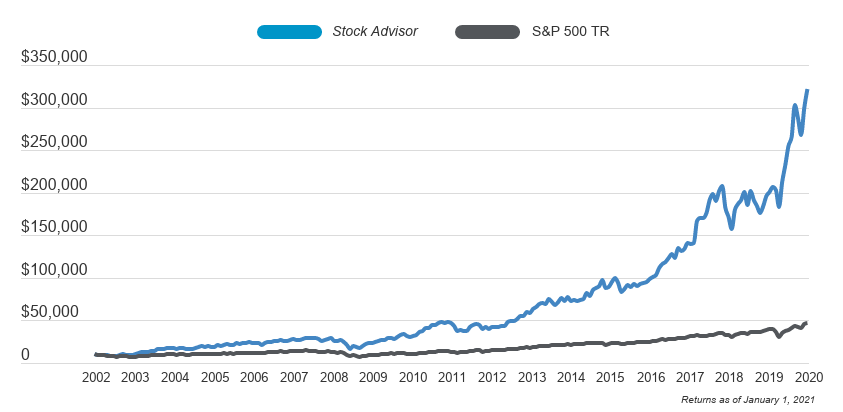
Retirement Planning
- The Basics of Retirement
- How much do I need to retire?
- 401k Essentials
- How do I compare?
- Social Security 101
- Retirement and Coronavirus
In Retirement
- How to Retire?
- What to Sell in Retirement?
- Estate Planning
Investing Tools
- Compare Stock Brokers
- Compare IRA Accounts
- Financial Calculators
How Much Money To Put Into 401k
Source: https://www.fool.com/retirement/strategies/how-much-should-i-put-in-401k/
Posted by: donleysavoid.blogspot.com
0 Response to "How Much Money To Put Into 401k"
Post a Comment